Spicy Food During Pregnancy


Written by Mindsmaking Medical Writer

Fact Checked by Mindsmaking Professionals
3rd, February, 2026
You might crave spicy food during pregnancy, but understanding the benefits, potential side effects, and practical tips to enjoy your favorite fiery dishes comfortably throughout your pregnancy journey can make all the difference.
If you are craving something spicy during pregnancy, you are just fine! Many pregnant women find themselves reaching for hot sauce, curry, or anything with a kick, whether it's a longtime love or a brand new craving.
The good news is that spicy foods are safe for both you and your baby. That heat won't harm your little one or affect your pregnancy in any dangerous way. That said, pregnancy does change how your body handles certain foods. What you enjoyed before might now trigger heartburn or an upset stomach, and that's completely normal.
Key Takeaways
Spicy foods are safe during pregnancy and won't harm your baby, but your individual tolerance may vary due to pregnancy-related digestive changes.
Spicy foods can boost metabolism, support immune function, ease nausea, add dietary variety, and improve circulation when consumed in moderation.
Spicy foods can trigger heartburn, indigestion, nausea, and gastrointestinal discomfort due to hormonal changes and a slowed digestive system during pregnancy.
There is no scientific evidence that spicy foods can induce labor, as digestive stimulation doesn't trigger the hormonal cascade needed to start labor.
Listen to your body, start with mild spices, eat earlier in the day, pair with dairy, and stay hydrated to enjoy spicy foods comfortably during pregnancy.
Contact your doctor if you experience severe or persistent heartburn, vomiting, or gastrointestinal issues, especially if you have pre-existing digestive conditions like GERD or IBS.
Is It Safe to Eat Spicy Food During Pregnancy?
It is safe to eat spicy food when you are pregnant. Despite what you might have heard, eating spicy foods won't harm your baby, cause miscarriage, or trigger early labor. The capsaicin, the compound responsible for the heat in peppers, does not cross the placenta. So while your mouth might be on fire, your baby is blissfully unaware, floating peacefully in their cozy environment.
However, just because spicy foods are safe doesn't mean they will feel comfortable for everyone. Pregnancy has a way of changing how your body responds to food. That spicy curry you loved before might now trigger heartburn or indigestion that lasts for hours.
Your tolerance to spicy foods during pregnancy is surprisingly individual. Your friend might handle jalapeños without issue while you are uncomfortable after mild salsa. You might breeze through spicy meals in your first trimester but find that you taste buds agree less later on. And if you already dealt with acid reflux or a sensitive stomach before pregnancy, those symptoms often become more noticeable now.
The bottom line is that you listen to your body. If spicy foods make you happy and do not cause uncomfortable symptoms, enjoy them guilt-free. But if they leave you reaching for antacids, try to dial down the heat until after your baby arrives.
Benefits of Eating Spicy Food During Pregnancy
While you might be reaching for spicy foods simply because they taste amazing, there are actually some nice perks that come with satisfying those cravings:
- Spicy foods boost metabolism. The capsaicin in hot peppers can give your metabolism a gentle nudge, slightly increasing calorie burning.
- They may help fight infections. Many spices like garlic, ginger, turmeric, and chili peppers contain antimicrobial and antioxidant properties that support your immune system during pregnancy.
- They help to ease nausea. Ginger-based spicy foods can help settle your stomach, which might explain why some women suddenly crave spicy ginger dishes during the first trimester.
- They add variety to your diet. Spicy foods keep meals interesting and help maintain a healthy appetite when everything else tastes bland or unappealing.
- They may improve circulation. Spicy foods can temporarily increase blood flow, giving you that warm, flushed feeling.
However, the key word here is moderation. You can enjoy the benefits when spicy foods are part of a balanced diet, not when you're eating ghost pepper challenges for breakfast. Enjoy the heat, reap the perks, and let your comfort level be your guide.
Possible Side Effects of Eating Spicy Food While Pregnant
While spicy foods are safe, they can come with some uncomfortable side effects thanks to the changes pregnancy brings to your digestive system. Here's what some moms-to-be might experience:
Heartburn and indigestion: Spicy foods are well-known triggers for heartburn and indigestion, which are already common complaints during pregnancy. During pregnancy, your body produces more progesterone, which relaxes the valve between your stomach and esophagus, making it easier for stomach acid to creep up. This effect is worsened as the growing uterus puts pressure on the stomach, especially during the second and third trimesters, making heartburn more frequent and intense. Eating spicy dishes can further irritate the digestive tract and worsen these uncomfortable symptoms.
Nausea and morning sickness: During the first trimester, many expectant moms experience nausea and morning sickness, and spicy foods may worsen these symptoms for some. While reactions vary from person to person, the strong flavors and aromas of spicy meals can trigger or intensify feelings of queasiness, particularly in those already sensitive to food smells or tastes.
Gastrointestinal discomfort: Pregnancy naturally slows down the digestive system to allow for better nutrient absorption, but this can also lead to gastrointestinal discomfort when combined with spicy foods. The capsaicin in spicy ingredients may irritate the gut lining, potentially causing indigestion, gas, bloating, and even diarrhea. Your body is working overtime already, and processing spicy meals can feel like asking it to run a marathon.
Can Spicy Food Induce Labor?
A popular myth you might have heard is that eating spicy food can help you kickstart labor, especially as your due date approaches. However, there is no scientific evidence to support this claim. While you will hear plenty of stories from friends who swear they went into labor after eating spicy Thai food, it is most likely coincidence rather than cause and effect. When you are full-term, labor can start at any moment whether you've eaten spicy food or not.
Spicy foods can stimulate your digestive system, sometimes causing cramping, gas, or bowel movements. These sensations might feel similar to early labor contractions, especially because the nerves in the digestive tract and uterus are in close proximity. They are happening in your intestines, not your uterus.
Also, digestive stimulation doesn't trigger the hormonal cascade needed to actually start labor. The mechanisms that initiate labor involve complex hormonal signals between your baby and your body, not capsaicin from hot peppers. If spicy foods could reliably induce labor, obstetricians would be prescribing jalapeños instead of medical interventions for overdue pregnancies.
So if you are 40 weeks pregnant and eyeing that spicy burrito as your ticket to finally meeting your baby, go ahead and enjoy it if it sounds good. Just don't expect it to do anything beyond satisfying your craving. Always consult your healthcare provider before trying any home remedies or dietary strategies to induce labor.
Read This Next
No posts available
Tips for a Comfortable Spicy Experience
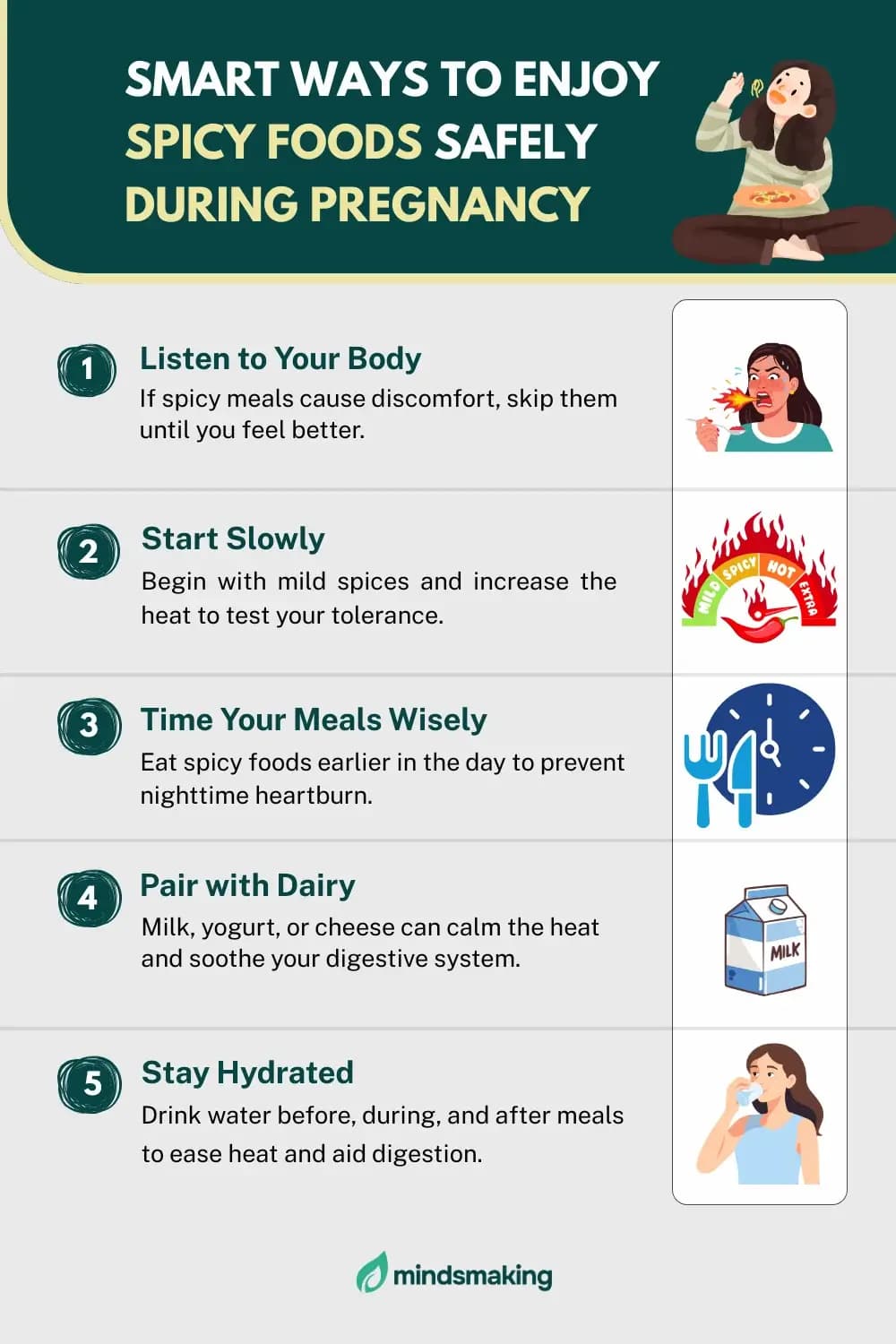
Love the heat but want to avoid the heartburn and discomfort? The good news is that you do not have to choose between satisfying your cravings and feeling good. With a few smart strategies, you can enjoy your favorite spicy dishes while minimizing the potential side effects that pregnancy can bring. Here are some practical tips to help you find that perfect balance:
- Listen to your body. Pay attention to how you feel after eating spicy meals. If certain dishes consistently leave you uncomfortable, it's perfectly okay to dial back the heat or skip them altogether.
- Start slowly. If you were not a regular spicy-food eater before pregnancy, don't jump straight to the hottest sauce on the shelf. Begin with milder spices and gradually increase the heat as you gauge how your body responds.
- Time your meals wisely. Try eating spicy foods earlier in the day rather than close to bedtime to give your body more time to digest and reduce the risk of heartburn keeping you up at night.
- Pair with dairy like milk, yogurt or cheese. This can help soothe your digestive system and tame the heat. A glass of milk or a dollop of sour cream on that spicy dish can make a difference.
- Stay hydrated. Drink plenty of water before, during, and after eating spicy foods. It helps manage the heat and supports digestion.
When to Consult a Doctor
While most pregnancy-related digestive discomfort from spicy foods is normal and manageable, there are times when it's important to reach out to your healthcare provider. Contact your doctor if you experience severe or persistent symptoms.
Occasional heartburn or mild indigestion is one thing, but if you are dealing with severe heartburn that does not respond to over-the-counter remedies, persistent vomiting that prevents you from keeping food or fluids down, or gastrointestinal issues that interfere with your daily life, it's time to get professional guidance. These symptoms could indicate a more serious condition that needs attention, or you may simply need stronger medication that is safe for pregnancy
If you have pre-existing digestive conditions, it is especially important to talk with your doctor about your diet. Conditions like gastroesophageal reflux disease (GERD), gastritis, irritable bowel syndrome (IBS), or peptic ulcers can be significantly affected by pregnancy hormones and your growing baby. Your healthcare provider can offer personalized advice on managing spicy food intake and may recommend specific dietary modifications or safe medications to keep you comfortable throughout your pregnancy.
Remember, your doctor is there to help you have the most comfortable pregnancy possible. Do not hesitate to bring up digestive concerns at your prenatal appointments, even if they seem minor.
A Word From Mindsmaking
Craving spicy food during pregnancy is completely normal, and you can safely enjoy it in moderation. The key is listening to your body. If spicy foods make you happy without causing discomfort, dig in guilt-free. But if they are triggering heartburn or other symptoms, it's okay to dial back the heat. Trust yourself to know what works, and don't hesitate to reach out to your healthcare provider with any concerns. Enjoy those cravings, mama!
Pregnancy by Week
Welcome to the enchanting journey of motherhood, where every week unfolds a new chapter of anticipation, growth, and wonder.





Frequently Asked Questions
Can spicy food cause miscarriage?
Spicy food cannot cause miscarriage. There is no scientific evidence linking spicy foods to pregnancy loss. The capsaicin in spicy foods doesn't cross the placenta or affect your baby's development in any way that would lead to miscarriage.
Can spicy food harm my baby?
Spicy food will not harm your baby. The capsaicin that creates the heat in spicy foods doesn't cross the placenta, so your baby won't experience any of the burning sensation you feel. Your baby remains safe and unaffected by your spice preferences.
Is it okay to eat spicy food in the third trimester?
It's safe to eat spicy food in the third trimester. However, you may experience more heartburn and indigestion during this time due to your growing baby putting pressure on your stomach. If spicy foods become uncomfortable, it's fine to reduce your intake.
Can eating spicy food help with nasal congestion during pregnancy?
Spicy foods can temporarily help clear nasal congestion. The capsaicin in hot peppers can thin mucus and open up nasal passages, providing short-term relief. However, this is a temporary effect and not a long-term solution for pregnancy-related congestion.
Should I avoid spicy food if I have gestational diabetes?
Spicy foods themselves don't directly affect blood sugar levels or gestational diabetes. However, you should focus on the overall nutritional content of your meals. If your spicy dishes are high in carbohydrates or unhealthy fats, you may need to adjust your choices.
Does craving spicy food mean I’m having a girl?
Food cravings cannot predict your baby's gender. This is an old wives' tale with no scientific basis. Cravings are influenced by hormonal changes, nutritional needs, and personal preferences, not by whether you are carrying a boy or girl.
Can spicy foods cause dehydration during pregnancy?
Spicy foods don't directly cause dehydration, but they can make you sweat more and increase your thirst. Staying hydrated is important during pregnancy regardless of what you eat, so drink plenty of water before, during, and after eating spicy meals.
Can spicy food cause loose stools during pregnancy?
Spicy foods can cause loose stools or diarrhea, especially during pregnancy when your digestive system is already more sensitive. The capsaicin in spicy foods can irritate your digestive tract and speed up bowel movements.
Does spicy food affect blood pressure in pregnancy?
Spicy foods don't significantly impact blood pressure during pregnancy. While capsaicin may have mild blood pressure-lowering effects, it's not strong enough to be a concern. If you have high blood pressure or preeclampsia, follow your doctor's dietary recommendations.
Is it okay to eat spicy food right before bedtime?
It's best to avoid spicy food right before bed during pregnancy. Spicy foods can trigger heartburn and acid reflux, which worsen when lying down. Try eating spicy meals earlier in the day and allow at least 2 to 3 hours before bedtime for better sleep.
Was this article helpful?
How many stars are you giving this article?
Leave a comment
Your email address will not be published.