10 Best Foods for Babies and Practical Ways to Introduce Them Safely

Written by Mindsmaking Medical Writer

Fact Checked by Mindsmaking Professionals
31st, March, 2026
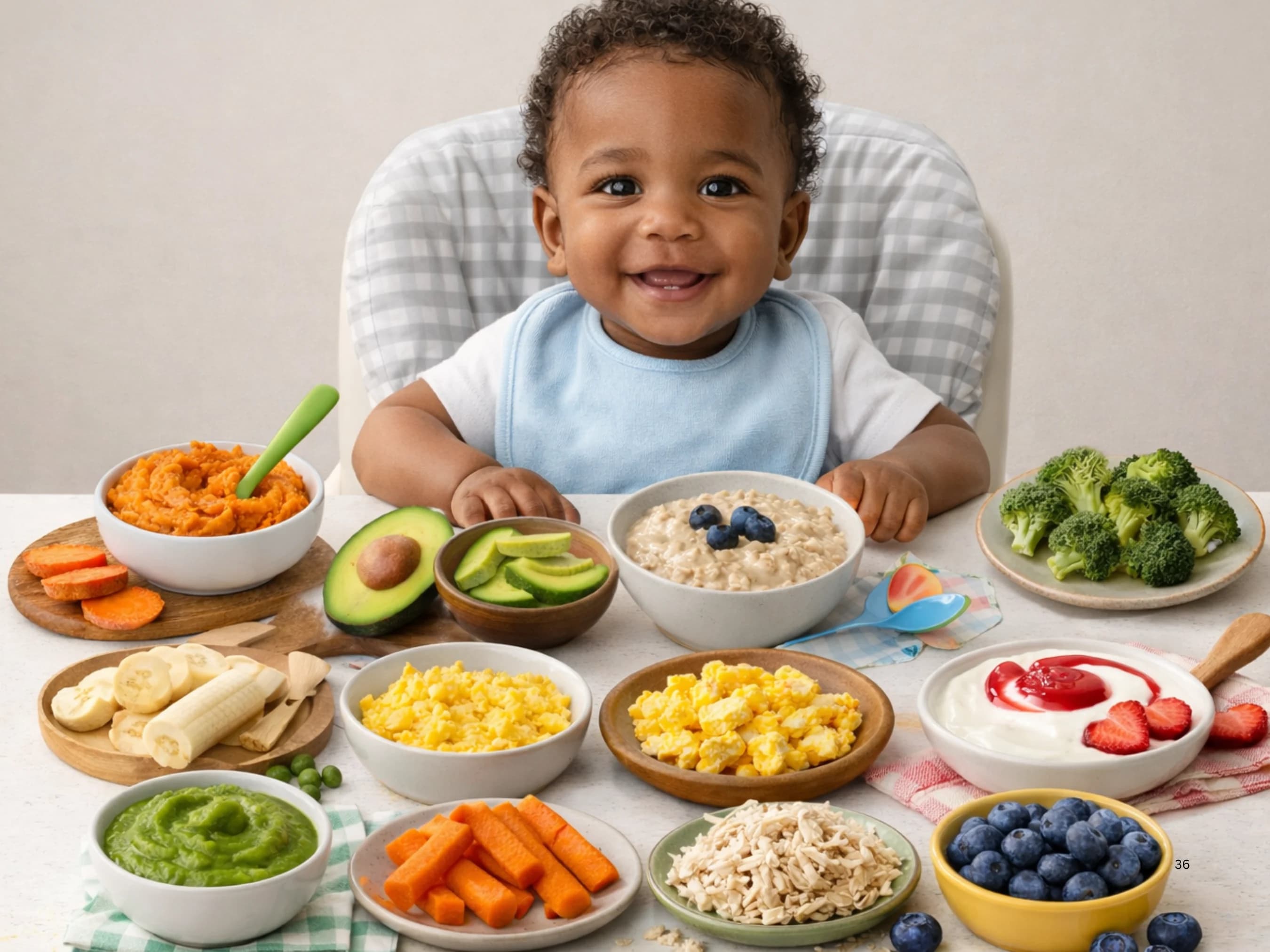
Starting solids can feel overwhelming. This guide outlines 10 nourishing foods for babies and explains how to prepare and introduce each one safely, whether you choose purées or baby-led weaning.
The first years of your child’s life are truly magical, and what they eat during this time can make a world of difference. Proper nutrition fuels their growing bodies, sharpens their developing brains, strengthens their immune systems, and builds strong bones and muscles. What you feed them today is an investment in the healthy, happy child they’ll become tomorrow.
Key Takeaways
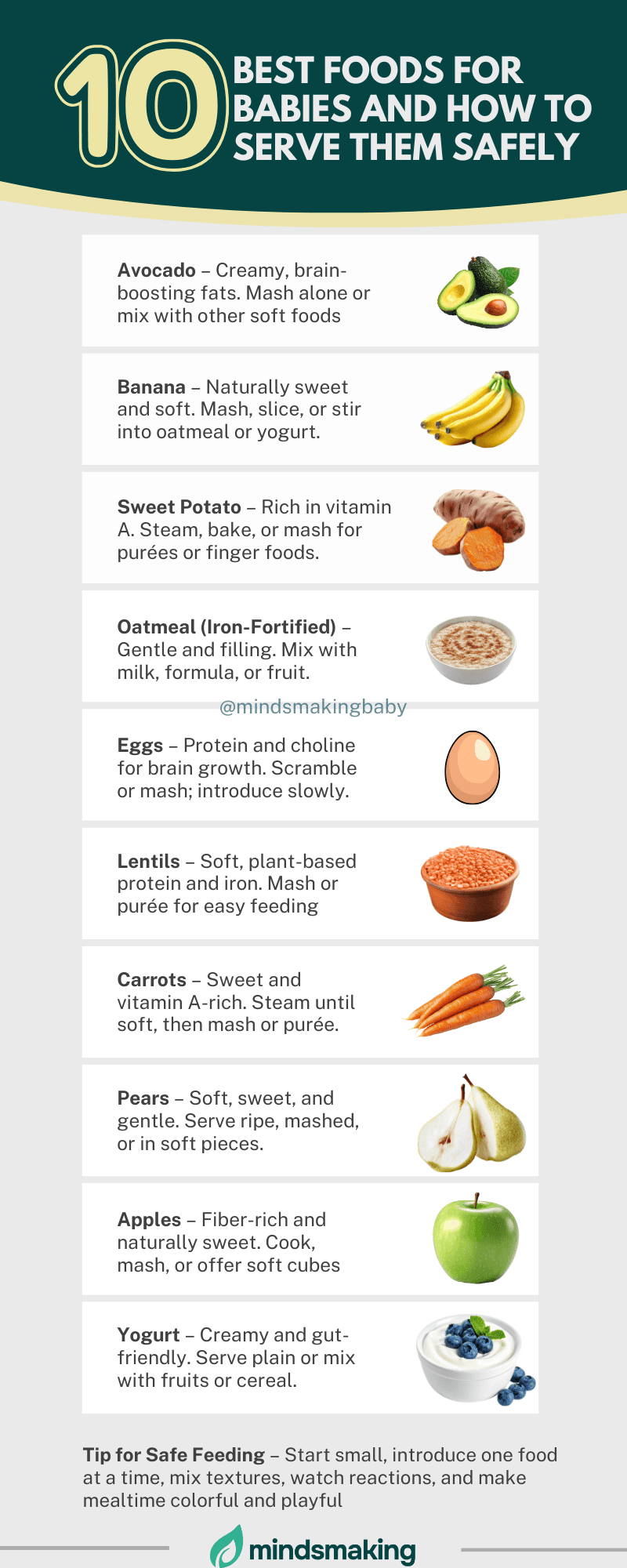
Avocado provides healthy fats, vitamins, and minerals that support your baby’s brain, eye, and bone development, and its soft texture makes it easy for babies to eat safely.
Bananas are gentle, naturally sweet, and rich in potassium, fiber, and vitamin B6, supporting digestion, energy, and healthy growth for babies.
Sweet potatoes offer vitamin A, fiber, and antioxidants to support vision, immunity, and growth, and their soft texture is ideal for babies starting solids.
Iron-fortified oatmeal helps prevent iron deficiency, supports brain and red blood cell development, and provides gentle, filling nutrition for babies.
Eggs supply high-quality protein and choline for growth and brain development, and starting with fully cooked yolks keeps them safe and easy to digest.
Lentils are soft, iron- and protein-rich, and support healthy growth, energy, and digestion when properly cooked and mashed for babies.
Cooked carrots provide vitamin A, fiber, and antioxidants for vision, immunity, and gentle digestion, and can be safely mashed or pureed for babies.
Cooked pears are soft, naturally sweet, and high in fiber, supporting digestion while offering gentle, baby-friendly nutrition.
Soft-cooked apples deliver fiber and vitamin C to support digestion and immunity, and can be pureed or mashed for safe baby feeding.
Plain, full-fat yogurt supplies calcium, protein, healthy fats, and probiotics to support bone, brain, and digestive health in babies.
Introduce foods one at a time, watch for reactions, avoid added sugar and salt, make mealtimes relaxed, and encourage self-feeding to safely support your baby’s growth and skills.
1. Avocado
Avocado is one of the most nutrient-dense first foods you can offer your baby. It’s rich in healthy monounsaturated fats that support brain and eye development during the first year of life. It also provides vitamin E for cell protection, vitamin K for bone health, and potassium to support muscles and nerve function. Simple and naturally soft, avocado is an easy way to nourish your baby from the start.
How to Introduce Avocado Safely
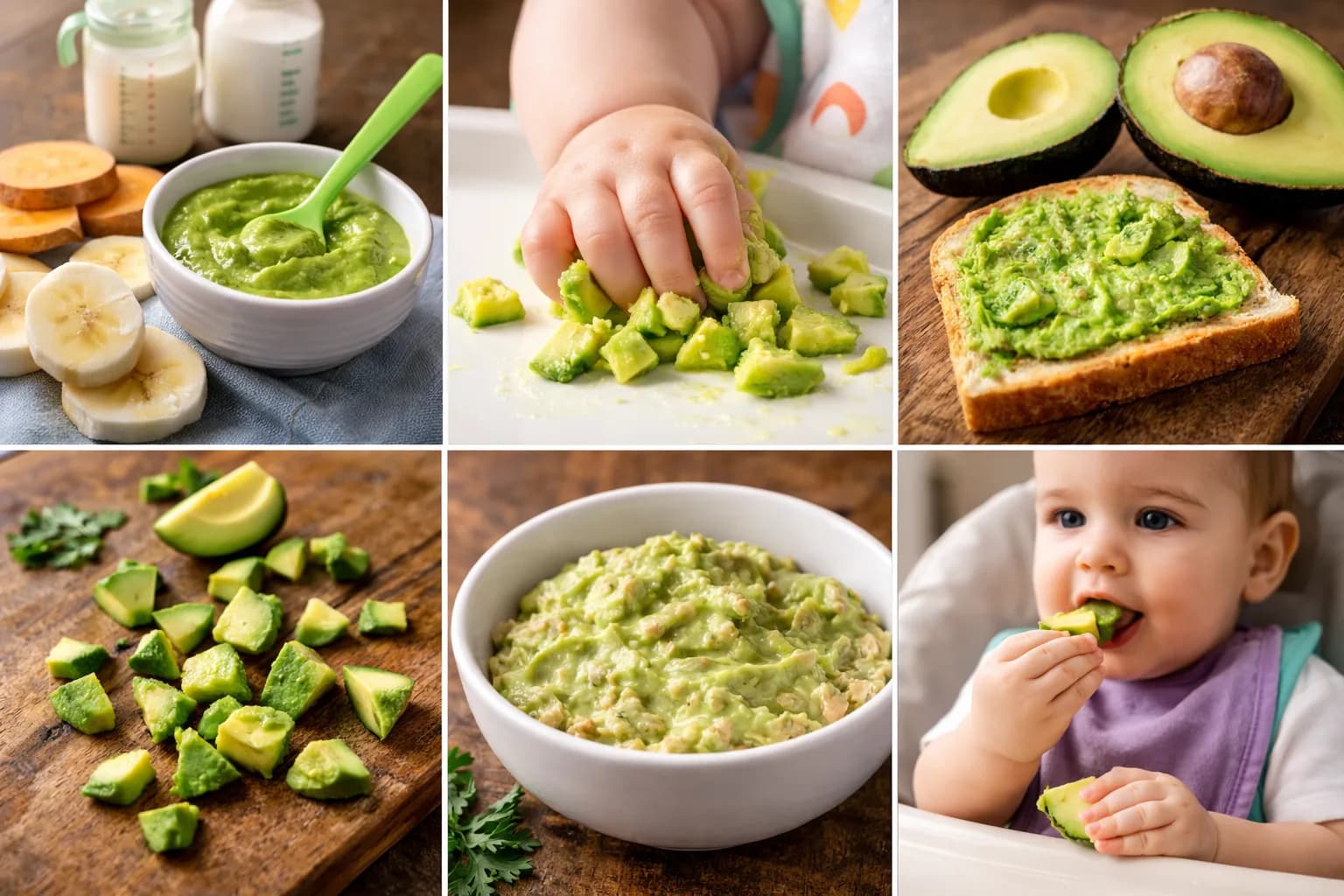
For babies starting solids around 6 months, begin with mashed or pureed avocado. Its creamy texture is gentle on gums and easy to swallow. You can thin it with breast milk or formula if needed, or mix it with familiar foods like banana or sweet potato.
As chewing skills improve, offer small, soft cubes for self-feeding. The pieces should mash easily between your fingers to reduce choking risk. For older babies and toddlers, avocado can be spread on soft toast, stirred into oatmeal, or served plain. Its mild flavor and smooth texture make it a versatile, baby-friendly food that supports healthy growth at every stage.
2. Banana
Bananas are one of the easiest and most baby-friendly first foods you can offer. Naturally soft and gently sweet, they are easy to digest and packed with nutrients that support healthy growth. Bananas provide potassium for muscle function and heart health, vitamin B6 to support brain development and energy production, and fiber that helps promote comfortable digestion. They are a nourishing option that introduces natural sweetness while supporting your baby’s developing body.
How to Introduce Bananas Safely
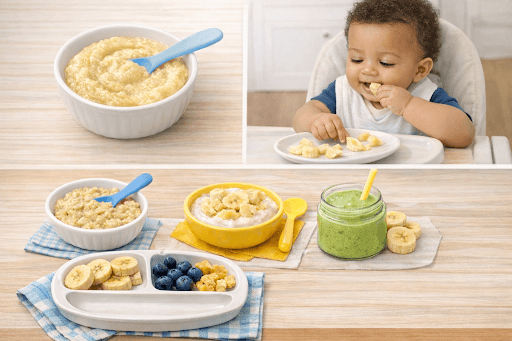
For babies starting solids around 6 months, begin with well-mashed or pureed banana to create a smooth, lump-free texture that is easy to swallow. If needed, thin the mash with breast milk or formula to reach a consistency your baby can manage comfortably. As your baby learns to chew better, offer small, soft pieces that mash easily between your fingers to reduce the risk of choking and encourage self-feeding.
As your baby grows, bananas can be mixed into oatmeal, yogurt, or baby cereal, blended into smoothies, or served as soft slices alongside other foods. Their mild flavor and creamy texture make them a versatile, nutrient-rich choice that supports healthy development while helping your baby explore new tastes confidently.
Read This Next
No posts available
3. Sweet Potato
Sweet potatoes are one of the most nourishing and gentle first foods you can offer your baby. Naturally sweet and easy to digest, they are rich in vitamin A to support healthy vision and immune function, fiber for gentle digestion, and antioxidants that help protect growing cells. Their soft, creamy texture and mild flavor make sweet potatoes a comforting, nutrient-dense option that supports healthy growth from the very beginning.
How to Introduce Sweet Potatoes Safely
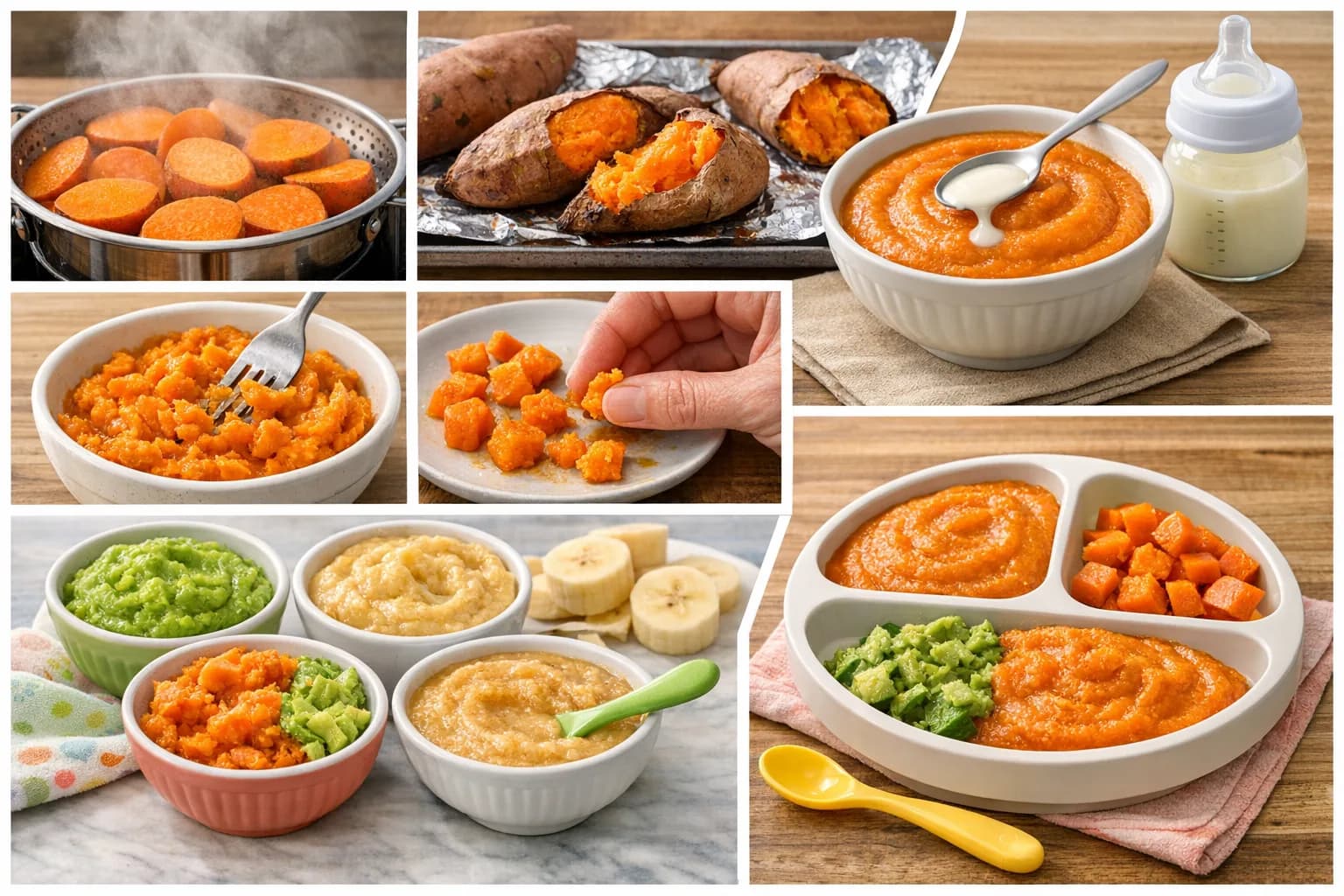
For babies around 6 months, cook sweet potatoes until very tender by steaming, roasting, or baking. Once soft, mash thoroughly with a fork or blend into a smooth puree to achieve an easy-to-swallow texture. For younger babies, you can thin the puree with breast milk or formula to make feeding more comfortable.
As your baby develops stronger chewing skills, offer thicker mashes or small, soft pieces that mash easily between your fingers to reduce choking risk. Sweet potatoes can be mixed with familiar foods like avocado or banana, stirred into baby cereal, or served on their own. Their naturally sweet flavor and smooth texture make them a versatile, baby-friendly food that supports healthy eating habits at every stage.
4. Oatmeal (Iron-Fortified)
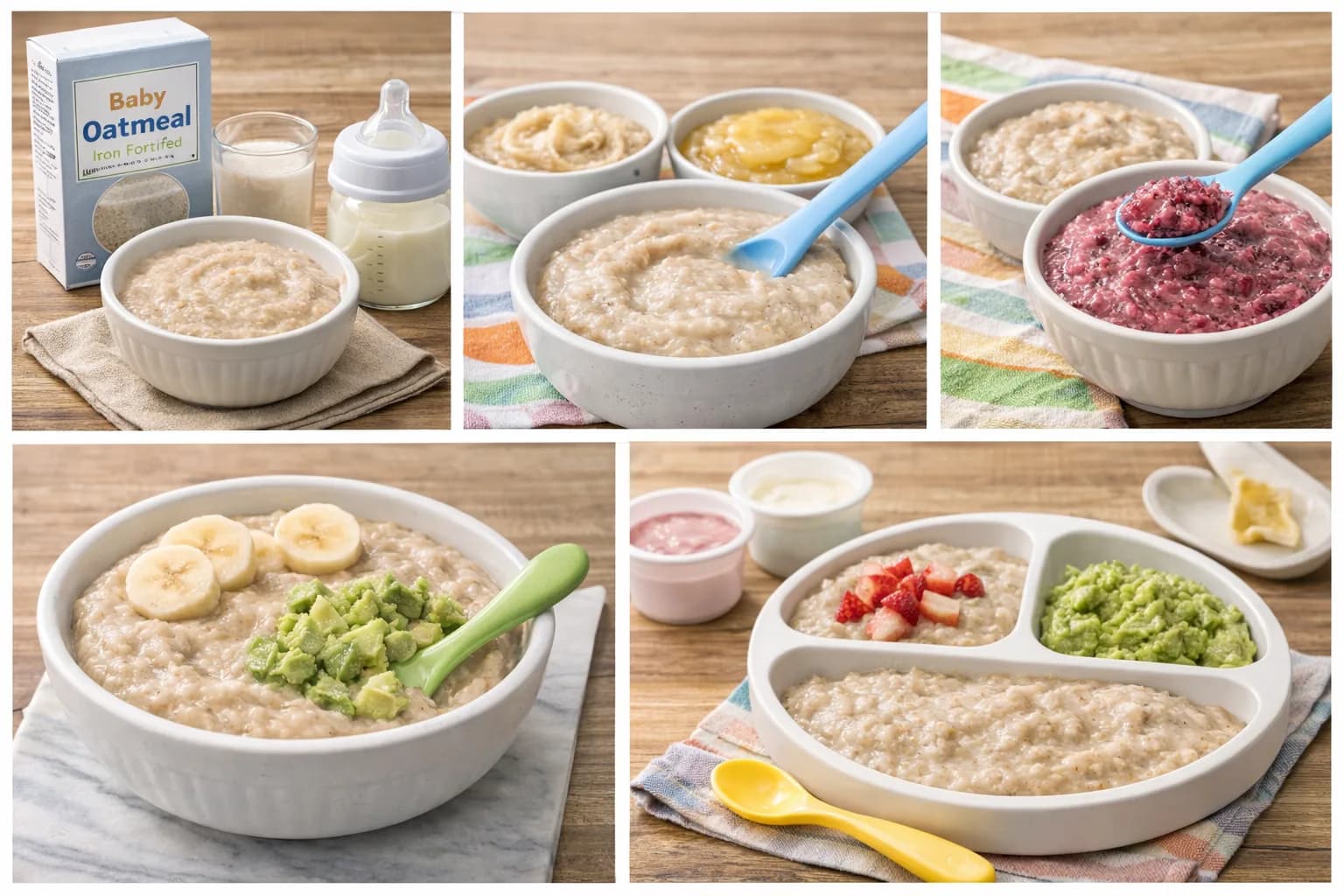
Oatmeal (iron-fortified) is a nourishing and important first food once your baby begins solids around 6 months. As babies grow, their natural iron stores from birth begin to decrease, making dietary iron essential for healthy brain development, red blood cell production, and sustained energy. Iron-fortified baby oatmeal provides a gentle, easy-to-digest source of this vital nutrient, supporting healthy growth during a period of rapid development. Its smooth texture and mild flavor make it a comforting and baby-friendly choice.
How to Introduce Oatmeal Safely
Start with iron-fortified baby oatmeal rather than regular adult oats, as baby oatmeal is finely ground to create a soft, smooth consistency that is easier for young babies to swallow. Prepare it with breast milk, formula, or water to achieve a thin, spoonable texture that your baby can manage comfortably.
As your baby becomes more familiar with solids, you can thicken the oatmeal slightly or mix in nutrient-rich foods like mashed banana, applesauce, or pureed berries for natural sweetness and added vitamins. Older babies may enjoy oatmeal combined with yogurt or mashed avocado to introduce new textures and flavors. Begin with small portions and gradually increase as your baby builds confidence, making oatmeal a versatile and nourishing staple that supports steady growth and development.
5. Eggs
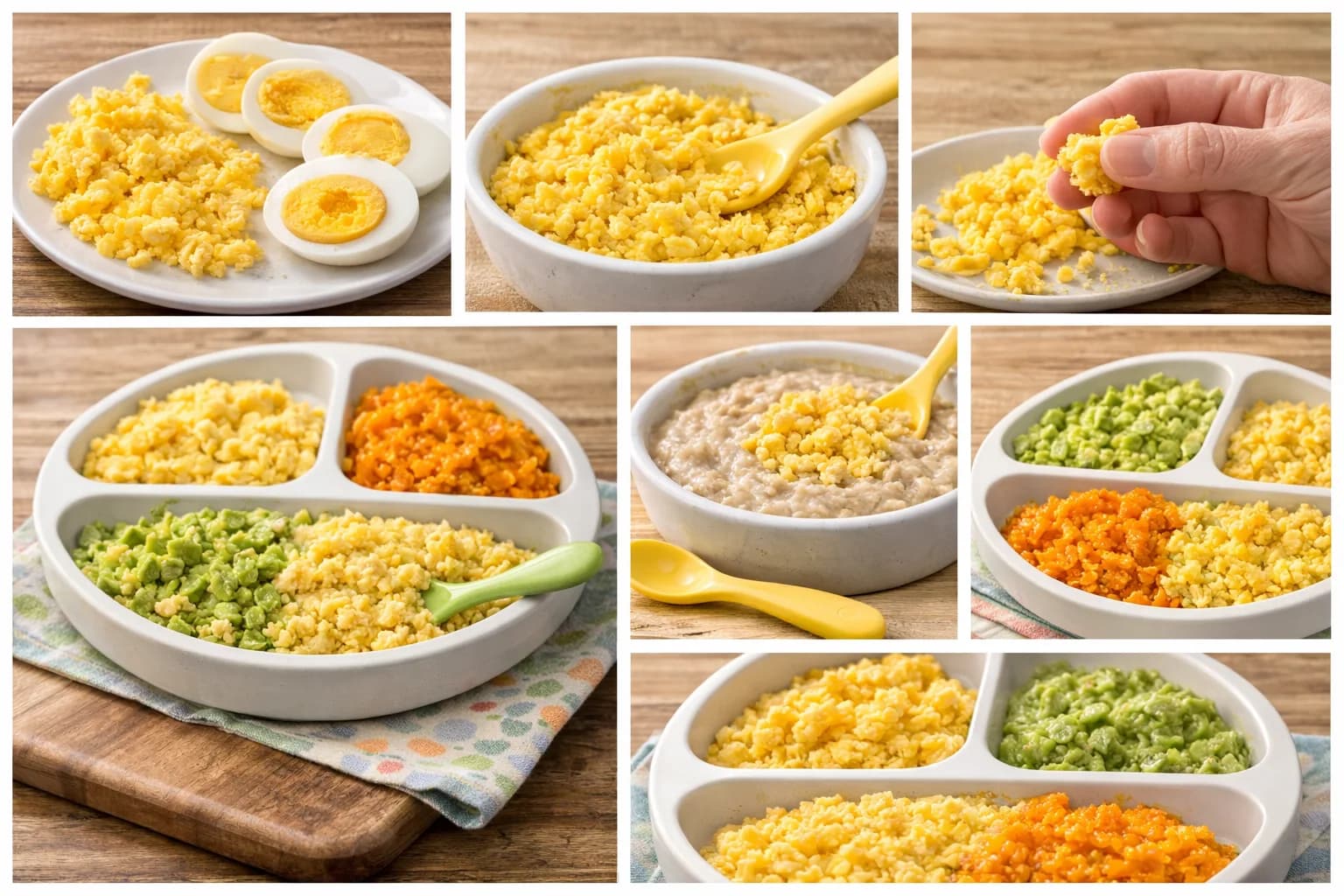
Eggs are a nutrient-rich and versatile food that can support your baby’s growth from the start of their solids journey. They provide high-quality protein needed for muscle development and overall health, along with choline, an important nutrient that supports brain development and memory. Eggs also provide essential vitamins and minerals that support healthy development, making them a simple yet powerful addition to early meals.
How to Introduce Eggs Safely
When introducing eggs to your baby around 6 months, always ensure they are fully cooked to reduce the risk of foodborne illness and make them easier to digest. You may begin with small amounts, offering mashed or finely crumbled egg with a soft, moist texture that is gentle on your baby’s gums. Start slowly and monitor for signs of sensitivity; increase portions gradually as tolerance is confirmed.
As your baby becomes more comfortable with new foods, eggs can be mixed with soft vegetables like avocado, sweet potato, or peas to add flavor and extra nutrients. You can also fold mashed egg into oatmeal or soft grains to introduce variety. Their mild taste and adaptable texture make eggs a nourishing, baby-friendly food that supports healthy growth while helping your baby explore new flavors.
6. Lentils
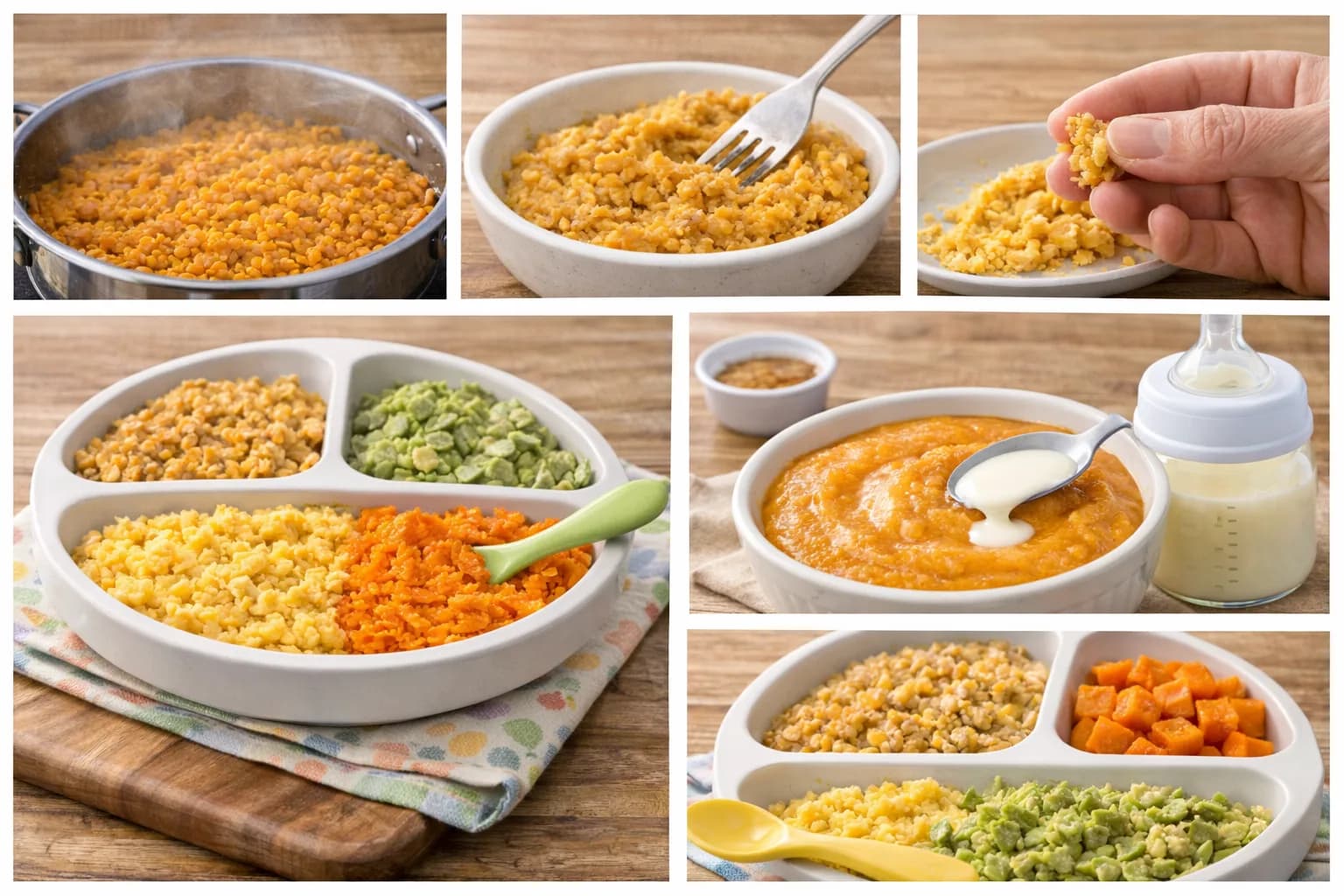
Lentils are a nourishing plant-based food to introduce once your baby is comfortable with solids. Naturally rich in iron, plant-based protein, and fiber, they support healthy growth, steady energy, and gentle digestion. The iron in lentils helps support brain development and red blood cell production, while fiber promotes comfortable digestion for little tummies. Affordable, versatile, and nutrient-dense, lentils are a wonderful option for families wanting to include more plant-based foods in their baby’s diet.
How to Introduce Lentils Safely
Cook lentils until very soft, so they easily mash between your fingers, ensuring a texture that is safe and easy for your baby to manage. For babies starting solids around 6 months, mash thoroughly with a fork or blend into a smooth purée. You can thin the mixture with breast milk, formula, or water to create a consistency that is easier to swallow.
As chewing skills develop, gradually offer thicker mashes or slightly textured lentils while keeping them soft and moist. Lentils pair well with gentle foods like carrots, sweet potatoes, or zucchini, adding both flavor and nutrition. For older babies, a small pinch of mild spices, such as cumin, can introduce new flavors gradually.
7. Carrots
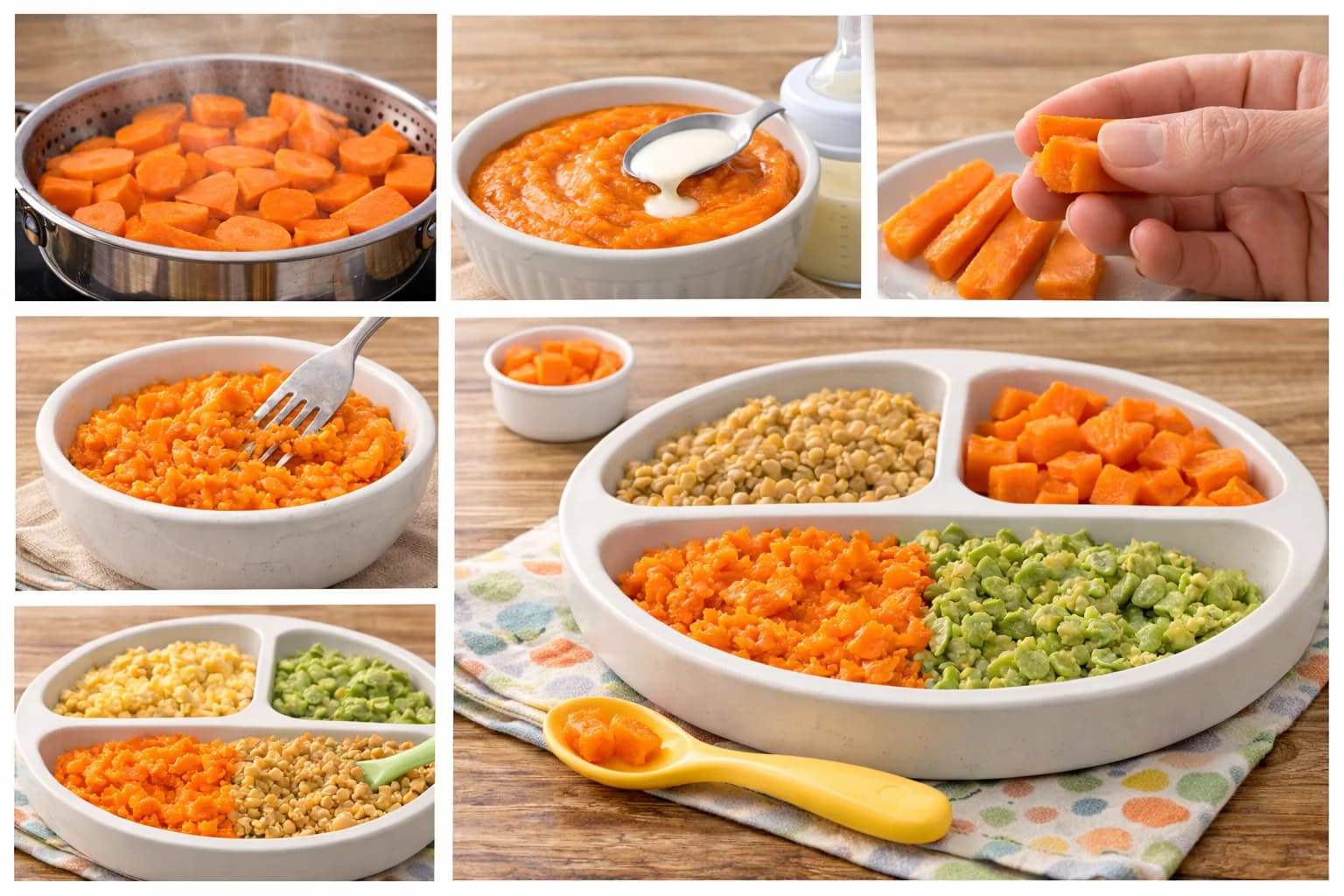
Carrots are a vibrant and nourishing food that can gently support your baby’s transition into solids. Naturally rich in vitamin A and beta-carotene, they help promote healthy vision, immune function, and overall growth. Carrots also provide fiber to support comfortable digestion as your baby’s tummy adjusts to new foods. With their mild sweetness and bright color, carrots offer a simple, nutrient-dense way to introduce new flavors while supporting healthy development.
How to Introduce Carrots Safely
For babies starting solids around 6 months, cook carrots until very soft by steaming or boiling so they are easy to mash and swallow. Blend into a smooth purée or mash thoroughly with a fork, and add breast milk, formula, or water if needed to achieve a soft, spoonable texture.
As chewing skills improve, offer soft, finger-sized pieces that mash easily between your fingers to encourage safe self-feeding. Carrots pair well with other baby-friendly foods such as lentils, sweet potatoes, and peas, making them a versatile ingredient for balanced meals. Their gentle sweetness makes carrots a comforting choice that supports healthy growth while helping your baby explore new tastes and flavors.
8. Pears
Pears are a gentle and comforting first fruit for babies, known for their natural sweetness and easy digestibility. Rich in fiber, they help support smooth digestion and can be especially helpful for easing mild constipation as your baby adjusts to solid foods. Pears also provide important vitamins that support overall growth and gut health, making them a nourishing and reassuring option for early feeding.
How to Introduce Pears Safely
When preparing pears for your baby, focus on softness and simplicity. For babies starting solids around 6 months, cook pears by steaming or poaching until very soft. Once tender, mash with a fork or blend into a smooth purée to achieve an easy-to-swallow texture. If needed, thin the purée with breast milk, formula, or water to achieve a soft, spoonable consistency.
As your baby becomes more confident with textures, you can offer thicker mashes or soft, ripe pieces that mash easily between your fingers. Pears pair beautifully with other baby-friendly foods like banana, apple, or berries, helping introduce new flavors while keeping meals gentle and nourishing.
9. Apples
Apples are a classic first fruit that many families introduce early in their baby’s feeding journey. Naturally sweet and gentle on digestion, they provide dietary fiber to support comfortable bowel movements as your baby adjusts to solids. Apples also contain vitamin C, which supports immune health and helps the body absorb iron from other foods. With their mild flavor and familiar taste, apples offer a comforting introduction to new textures and flavors during early feeding.
How to Introduce Apples Safely
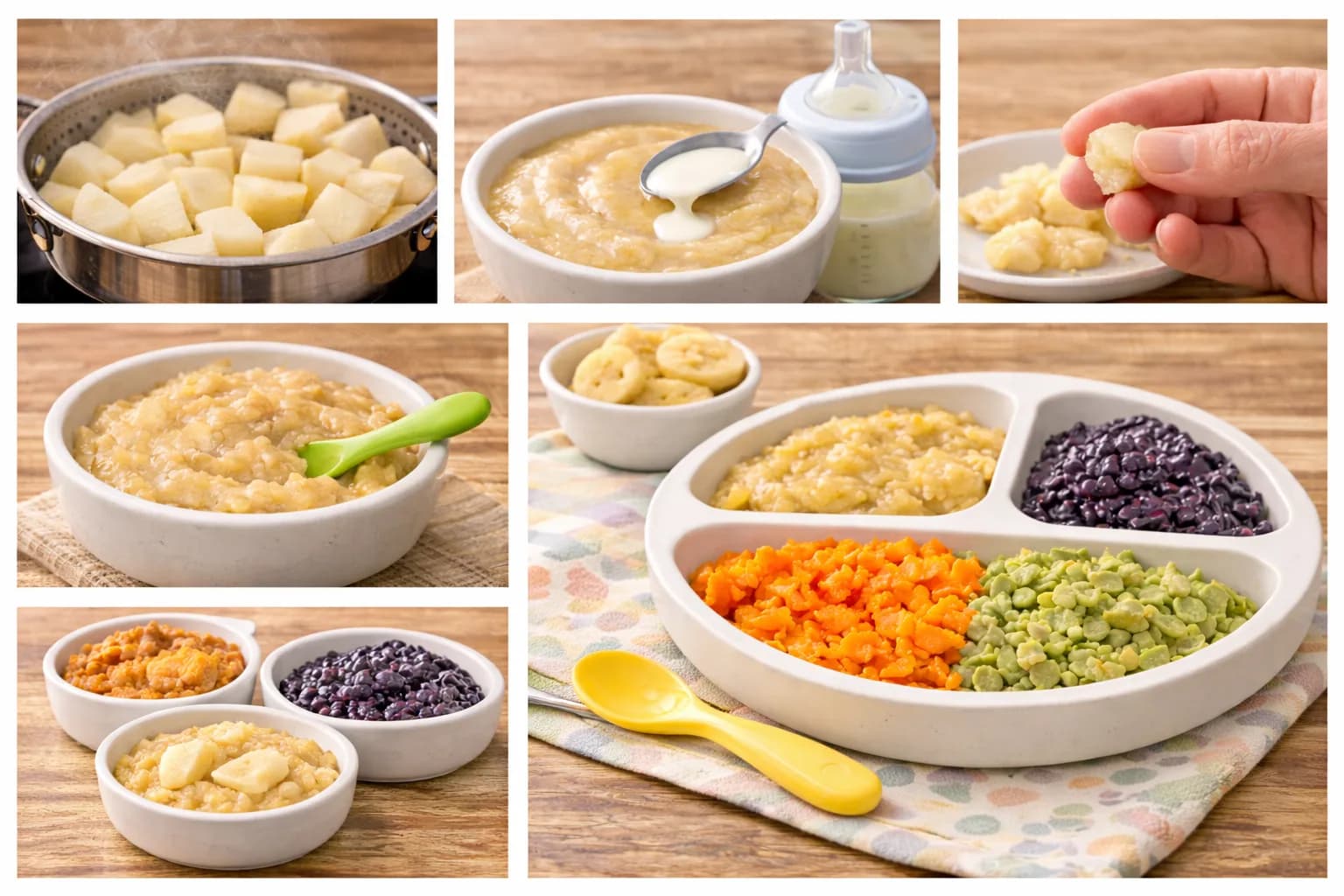
Because raw apples are firm, they should always be softened before offering them to young babies. Start by peeling and cooking the apples until they are tender and easily mashed. In the early stages, a smooth purée or soft mash works well, creating a texture that is gentle on the gums and easy to swallow. As your baby develops stronger chewing skills, you can gradually offer soft-cooked slices, cubes, or wedges that squash easily between your fingers, encouraging safe self-feeding.
Apples are also wonderfully versatile for early flavor exploration. A light sprinkle of cinnamon can add warmth without overwhelming sensitive palates, while pairing apples with pears, pumpkins, oatmeal, or yogurt introduces new flavors in a familiar way. These gentle combinations help your baby build confidence with food while enjoying nourishing, comforting meals.
10. Yogurt
Plain, unsweetened full-fat yogurt can be a nourishing and satisfying addition once your baby is comfortable with solids. Its naturally smooth texture and mild flavor make it easy for many babies to accept, while its nutritional profile offers important benefits. Yogurt provides calcium for strong bones and teeth, protein to support growth and development, and probiotics that help maintain a healthy gut as your baby’s digestive system adapts to new foods. Full-fat varieties are helpful during infancy, as healthy fats support brain development and provide sustained energy.
How to Introduce Yogurt Safely
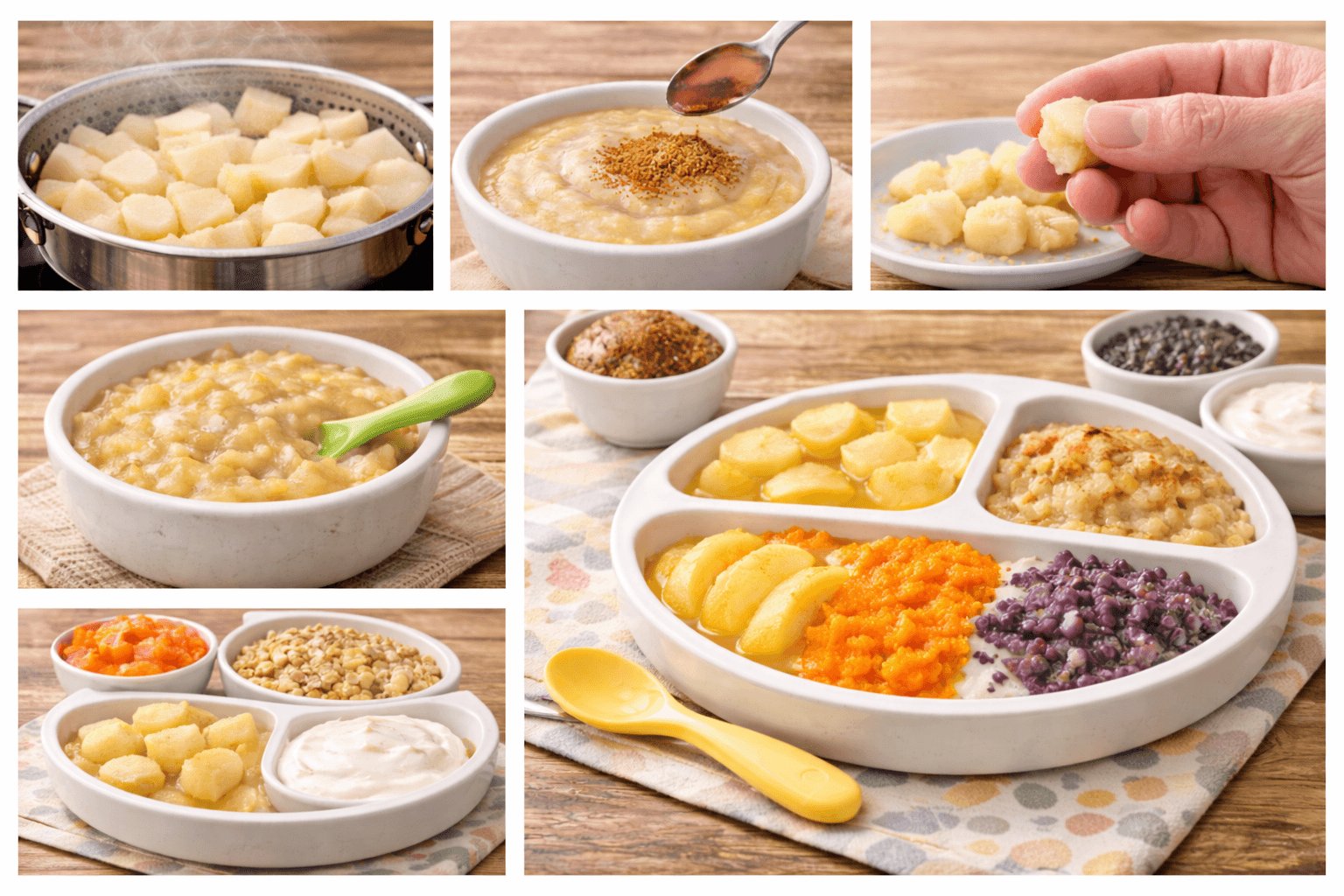
Begin with small spoonfuls of plain yogurt served on its own so you can observe how your baby responds, especially if dairy is new. Look for options with a simple ingredient list, ideally just milk and live cultures, and avoid flavored or sweetened versions that may contain added sugars. Take your time with introductions; a few tastes at first are enough while your baby becomes familiar with the flavor and texture.
As your baby grows more confident, yogurt can be combined with soft fruits to add variety while keeping meals balanced and gentle. Mashed banana adds natural sweetness, apple or pear brings a mild fruity flavor, and berries can introduce a slightly tangy note for older babies.
5 Practical Tips for Introducing Foods to Babies Safely
Here are five practical tips to guide you:
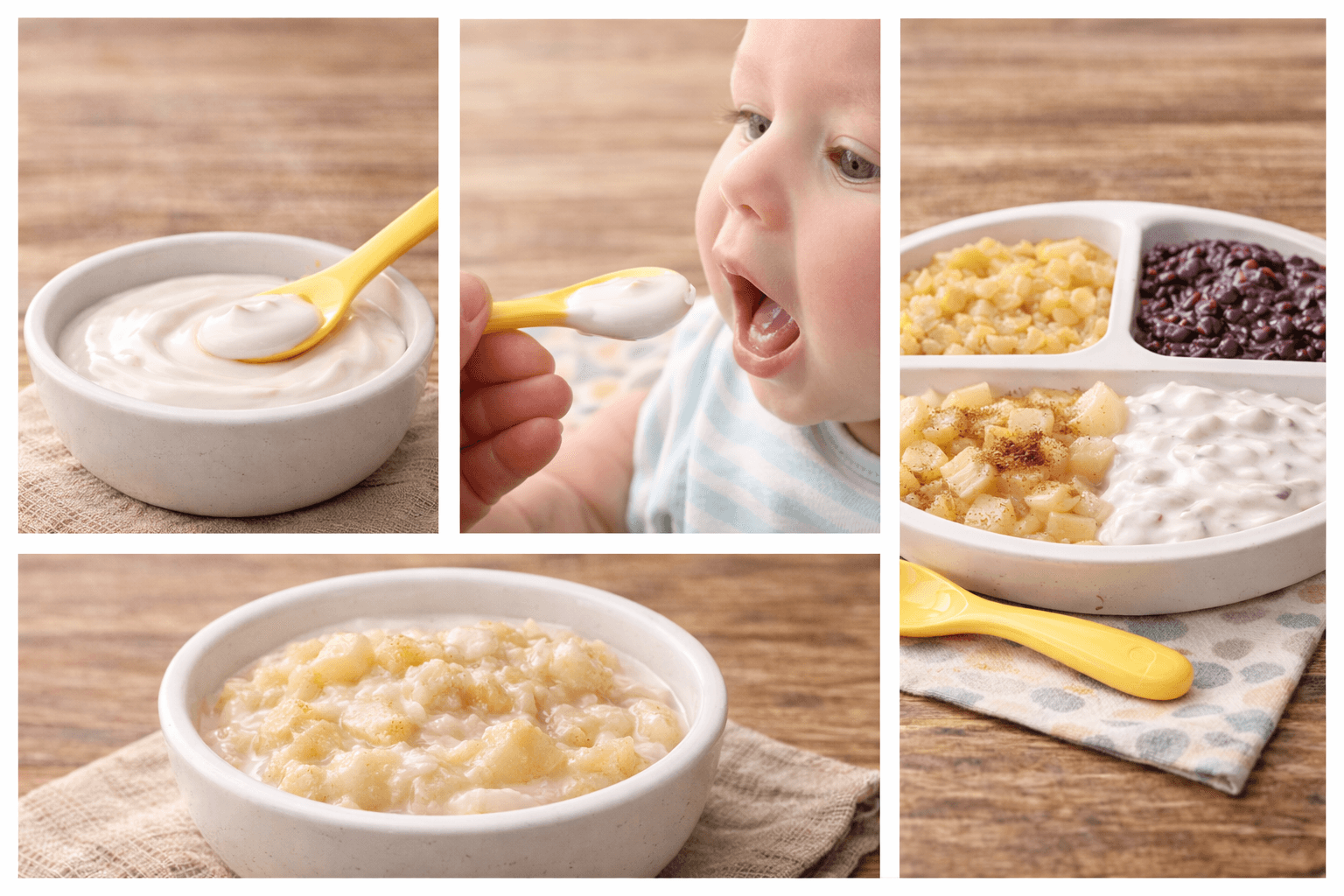
1. Introduce one new food at a time: Start with a single new food and wait 3–5 days before offering another. This slow approach helps your baby get used to each flavor and texture without feeling overwhelmed. It also makes it much easier to spot any allergic reactions or digestive issues, giving you peace of mind as you expand your baby’s diet.
2. Watch for signs of allergies or digestive discomfort: As your baby tries new foods, observe for reactions such as rashes, hives, vomiting, diarrhea, or unusual fussiness. Mild reactions are common, but repeated or severe symptoms should be discussed with your pediatrician. Being observant allows you to introduce foods confidently and safely, without unnecessary stress.
3. Avoid added sugar, salt, and strong spices: Babies’ kidneys and developing taste buds are sensitive, so it’s best to stick to natural flavors. Avoid adding sugar, salt, or strong seasonings, even in small amounts. This not only keeps foods healthy but also helps your baby develop a preference for whole, natural foods, making it easier for them to enjoy a variety of flavors as they grow.
4. Make mealtime fun and stress-free: Creating a relaxed and positive feeding environment is just as important as the food itself. Smile, talk, and engage with your baby during meals, and don’t worry about messes or occasional refusals. Babies learn through exploration, and when mealtimes are calm and enjoyable, they begin to associate food with comfort and fun rather than pressure.
5. Encourage self-feeding when appropriate: As your baby shows readiness, allow them to practice picking up soft, age-appropriate foods or using a small spoon. This supports hand-eye coordination, motor skills, and independence, while giving your baby confidence to explore new textures and flavors at their own pace.
A Word From Mindsmaking
Feeding your baby can sometimes feel like a big responsibility, but here’s a little reassurance that there’s no such thing as a “perfect” baby diet. Every baby is unique, and what works for one might not work for another. Offer a variety of foods, and even if your baby rejects any, you can just try again. Babies are naturally curious and sometimes messy eaters, and that’s how they learn and explore.
Remember, the goal isn’t perfection. It’s about creating positive, stress-free mealtimes and helping your baby build a healthy relationship with food. Celebrate the small wins, embrace the mess, and enjoy the journey. You’re doing better than you think.
Frequently Asked Questions
Can I give my baby a banana as the very first food?
Bananas are soft, naturally sweet, and easy to digest, making them a popular choice for first foods. Start with small, mashed spoonfuls and watch how your baby responds.
Can my baby eat avocado as a first food?
Avocado is creamy, nutrient-dense, and packed with healthy fats for brain development. Offer it mashed or in small cubes for older infants learning to self-feed.
When can my baby eat sweet potatoes?
Sweet potatoes are ideal for babies once solids are introduced, usually around 6 months. Steam or bake until soft, then mash or puree for younger babies, or cut into soft finger-sized pieces for older infants.
What should I do if my baby refuses a certain type of food?
Keep offering the food repeatedly, in small amounts, and try pairing it with familiar flavors. Patience and persistence help babies gradually accept new tastes.
Was this article helpful?
How many stars are you giving this article?
Leave a comment
Your email address will not be published.